Thriving with Adult ADHD: Real Strategies for Resilience
Phillip Jones sits down with James Ochoa to explore practical tools for thriving with adult ADHD — movement, mindfulness, gratitude, resourcing, and reframing your life story. Honest talk on resilience, anxiety, and living fully.
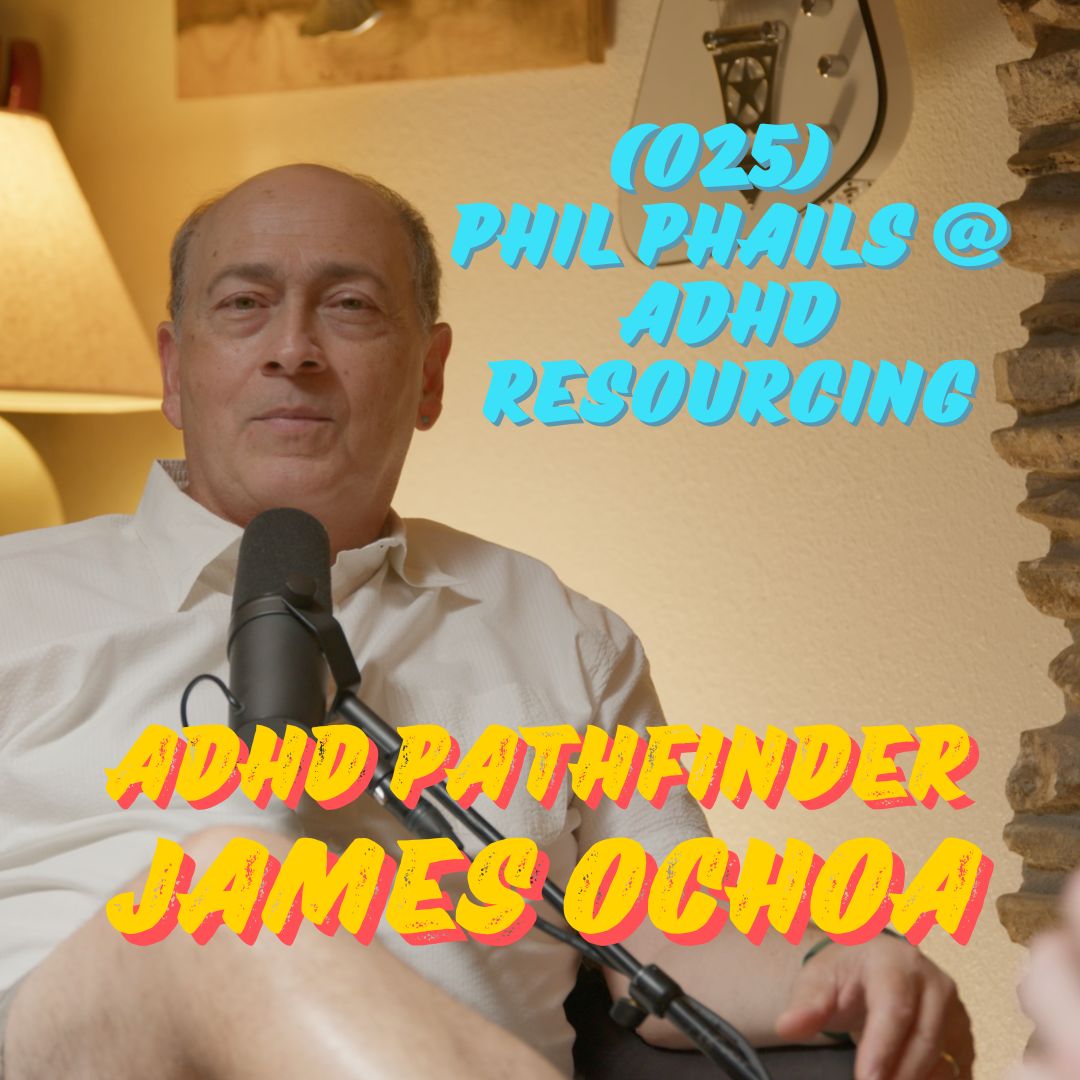
What does it really look like to thrive with adult ADHD when the initial excitement fades and life keeps throwing storms your way? In this conversation with James Ochoa, LPC — ADHD pathfinder and author of Focus Forward — we moved beyond basic tips into deeper strategies for building resilience and resourcing yourself over a lifetime.
James has spent over 35 years working almost exclusively with adults who have ADHD. His approach is practical, compassionate, and rooted in real clinical experience. We talked about the internal restlessness that doesn’t disappear, how to build dynamic balance, and why understanding your own life history might be one of the most powerful resources you have.
Resilience: Learning to Bend Without Breaking
Resilience isn’t about never getting dysregulated. It’s about recovering faster and staying connected to yourself when anxiety, restlessness, or external stress hits. James emphasized that dysregulation is a natural part of the human condition — especially with ADHD — but we can plan for it instead of fearing it.
Your body wants to return to homeostasis. The key is building the flexibility (neuroplasticity) to handle the inevitable spikes without spiraling.
Movement as Medicine: The Decathlon Approach
One of the simplest, most effective resources? Movement. James uses a “decathlon approach” — keeping 10 different options available so your interest can guide you instead of forcing a rigid routine that leads to boredom or resistance.
Examples we discussed:
- Park in the far row at the grocery store
- Walk and talk with friends (headphones on the greenbelt)
- Turn chores like pressure-washing the house or mowing into intentional movement
- Strength training, yoga, hiking, cycling, landscaping — whatever keeps it fresh
Movement improves sleep, mood, and executive function. It’s not about punishment or “no pain, no gain.” It’s about choosing activities that match your energy and values.
Mindfulness, Meditation & Training Your Brain
Mindfulness helps you stay present instead of getting lost in past regrets or future worries. James recommended apps and practices using binaural beats and structured training to build focus and gamma flow states.
The goal isn’t perfection. It’s noticing when you’re spiraling and gently returning to the present. Even short practices compound over time.
Gratitude & Appreciation: Countering the Negativity Bias
Our brains are wired with a negativity bias — threats and problems stick more easily. Gratitude and specific appreciation practices help rebalance that.
James stressed making it concrete: “Thank you for picking up the glass” rather than a vague “you’re great.” This builds connection in relationships and strengthens your own sense of self-worth.
Mining the Gems in Your Life History
One of the most powerful ideas: your life story — including the hard parts — is a rich source of strength, wisdom, and knowledge. Instead of avoiding painful chapters, reframe them with self-compassion.
Ask yourself:
- What was the experience?
- What strength did it build in me?
- What wisdom or hope can I take from it?
- How does this knowledge serve me now?
This turns shame or avoidance into usable resources. James shared personal examples of reframing childhood chaos into understanding his own intensity and drive.
My Personal Reflection
This episode hit home. Like many with ADHD traits, I’ve struggled with consistency and self-criticism. James’s emphasis on dynamic balance instead of perfect regulation felt freeing. The idea that I don’t need to eliminate anxiety or restlessness — just learn to move with it — shifted something for me.
I’ve started thinking more intentionally about my own “decathlon” of movement and catching myself when I default to harsh self-talk. Mining my own life history for gems is ongoing work, but it feels more possible after this conversation.
Practical Takeaways
- Build a movement menu — List 8–10 activities you enjoy. Choose based on your current interest and energy instead of forcing one rigid plan.
- Practice short resets — Use 5–20 minute naps, walks, or mindfulness sessions in the afternoon to work with your natural circadian rhythms.
- Get specific with gratitude — Notice and name exact things people do. Make appreciation a daily practice in relationships and with yourself.
- Mine your history — Pick one challenging memory. Identify the experience, strengths gained, wisdom, and how it serves you today.
- Reframe discomfort — When your “legs are burning” (literally or metaphorically), recognize it as growth instead of failure.
- Resource yourself first — Build internal connection and self-compassion before expecting external fixes or perfect strategies.
Final Thoughts
Thriving with adult ADHD isn’t about becoming someone who never struggles. It’s about developing the tools, awareness, and self-relationship to keep moving forward through the storms.
About James Ochoa
James Ochoa, LPC, has worked with adults with ADHD for over 30 years. Author of Focus Forward: Navigating the Storms of Adult ADHD, he is currently writing When the Shiny Wears Off. James offers coaching, counseling, and workshops, helping people turn challenges into strengths.
🌐 Find James Ochoa:
-
Websites: FocusedForwardADHD.com jamesochoa.com