Can Consciousness Be Explained? Western vs Buddhist Views
Phillip Jones and Grant Potts explore the hard problem of consciousness through Western physicalism, idealism, and Buddhist philosophy like Yogacara mind-only. What is first-person experience, and can we ever fully explain it?
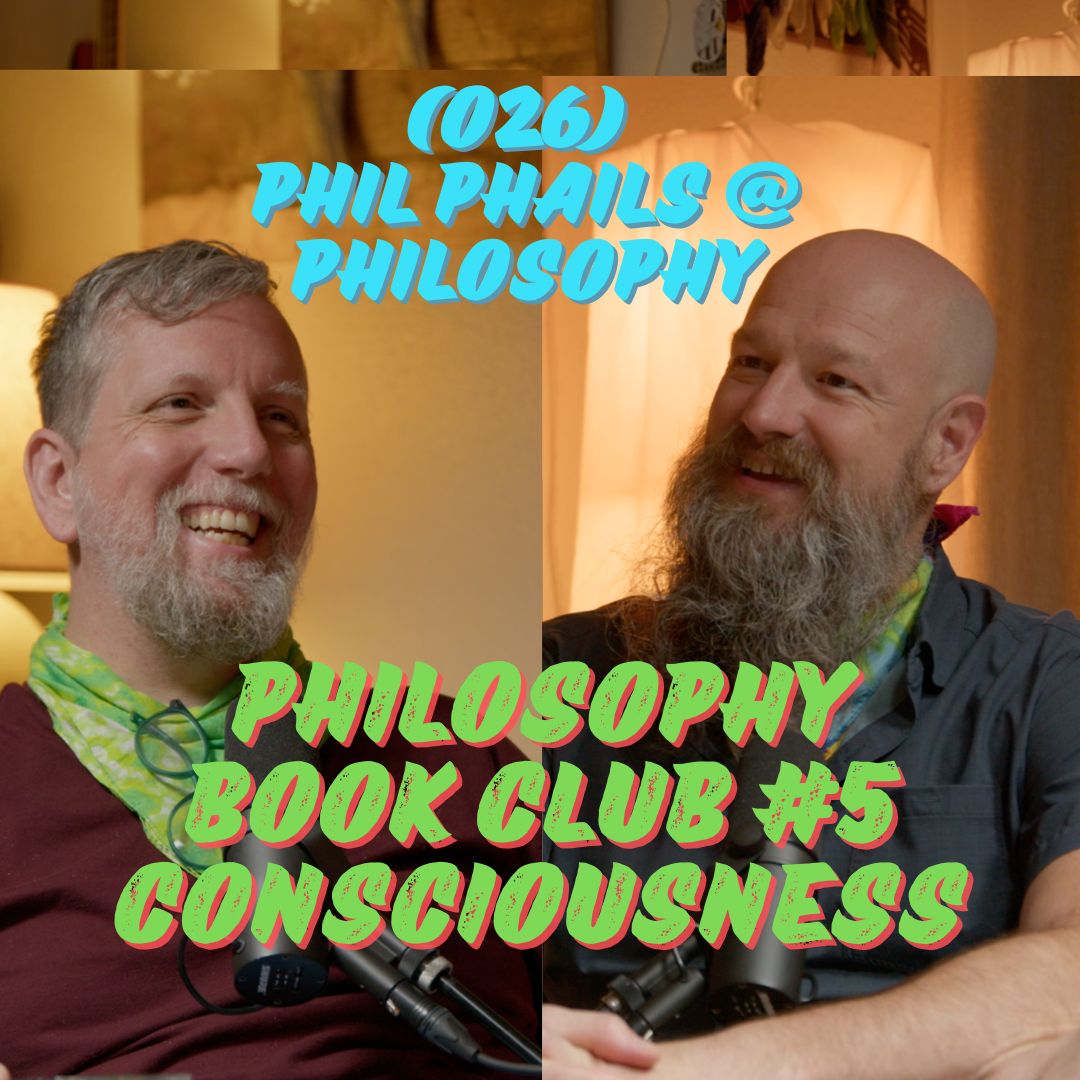
Can consciousness be explained? It’s one of the deepest puzzles in philosophy — the gap between what we observe in the brain and the vivid, subjective experience of being alive. In this episode of the philosophy book club, Grant Potts and I wrestled with Dan Arnold’s chapter, comparing Western approaches to Buddhist perspectives.
We didn’t land on easy answers, but the conversation sharpened how I think about my own mind, decisions, and daily awareness.
The Hard Problem of Consciousness
David Chalmers famously named it the “hard problem”: even if we map every neuron, synapse, and brain process, why does any of that produce the felt experience of seeing red, tasting coffee, or feeling joy? Physicalist explanations describe the mechanics well but struggle to bridge to subjective “what it’s like” awareness.
We discussed how idealism (mind-only) and physicalism both run into limits. The chapter highlights that neither fully resolves the mystery.
Buddhist Insights: Mind-Only and Perception
The Buddhist section, especially Yogacara thinkers like Vasubandhu and Dignaga, offered a fresh angle. Consciousness isn’t neatly located in a physical brain or a separate soul — it’s intertwined with perception, memory, and the flow of mental events.
Key takeaway: our everyday experience of objects (like picking up a coffee cup) is a constructed reality. We don’t directly access some independent “thing” — we experience through mind. This connects to ideas of conventional truth (how things appear) versus ultimate truth (emptiness/impermanence).
My Personal Reflection
This chapter surprised me with how practical it felt despite the abstract territory. What challenged me was realizing how much I assume my “I” is solid and continuous, when Buddhist analysis reveals it as a stream of conditions and perceptions.
Reading and discussing this shifted something small but important: I’m paying more attention to the quality of my moment-to-moment awareness instead of just the content. It’s humbling and freeing. Grant’s ability to move between dense philosophy and real-life gardening or community made it land even deeper.
Practical Takeaways
- Notice first-person experience — Pause during ordinary moments (drinking coffee, walking) and observe the raw “what it’s like” quality. This builds mindfulness.
- Question your constructs — When you feel strongly about something, ask what mental habits or past perceptions are shaping the story.
- Hold views lightly — Physical explanations and spiritual ones both have limits. Stay curious rather than dogmatic.
- Value perception and memory — Understand that much of “reality” is filtered through your senses and history — this reduces reactivity.
- Embrace the middle way — Avoid extreme materialism or escapism. Live in conventional reality while appreciating deeper truths.
- Cultivate awareness practices — Simple daily reflection or meditation helps bridge the explanatory gap in your own life.
Final Thoughts
Consciousness remains mysterious, and maybe that’s part of its wonder. Whether through neurons, mind-only, or something in between, the invitation is the same: pay closer attention to this strange, beautiful experience of being here.
About Grant Potts
Grant Potts is a distinguished faculty member at Austin Community College, specializing in Philosophy, Religion, and Humanities. Trained primarily as a scholar of religion, Grant is also a dedicated philosopher and curriculum developer, committed to promoting liberal education through the Great Question Foundation to benefit community college students of all disciplines. Outside the academic sphere, he is a passionate gardener, an enthusiastic hiker and cyclist, and an ardent tabletop roleplaying game enthusiast.