Do We Have Free Will? Western vs Buddhist Views
Phillip Jones and Grant Potts explore free will, determinism, agency, and Buddhist perspectives on choice. Can we truly decide our path, or is everything caused? Honest reflections on making decisions in real life.
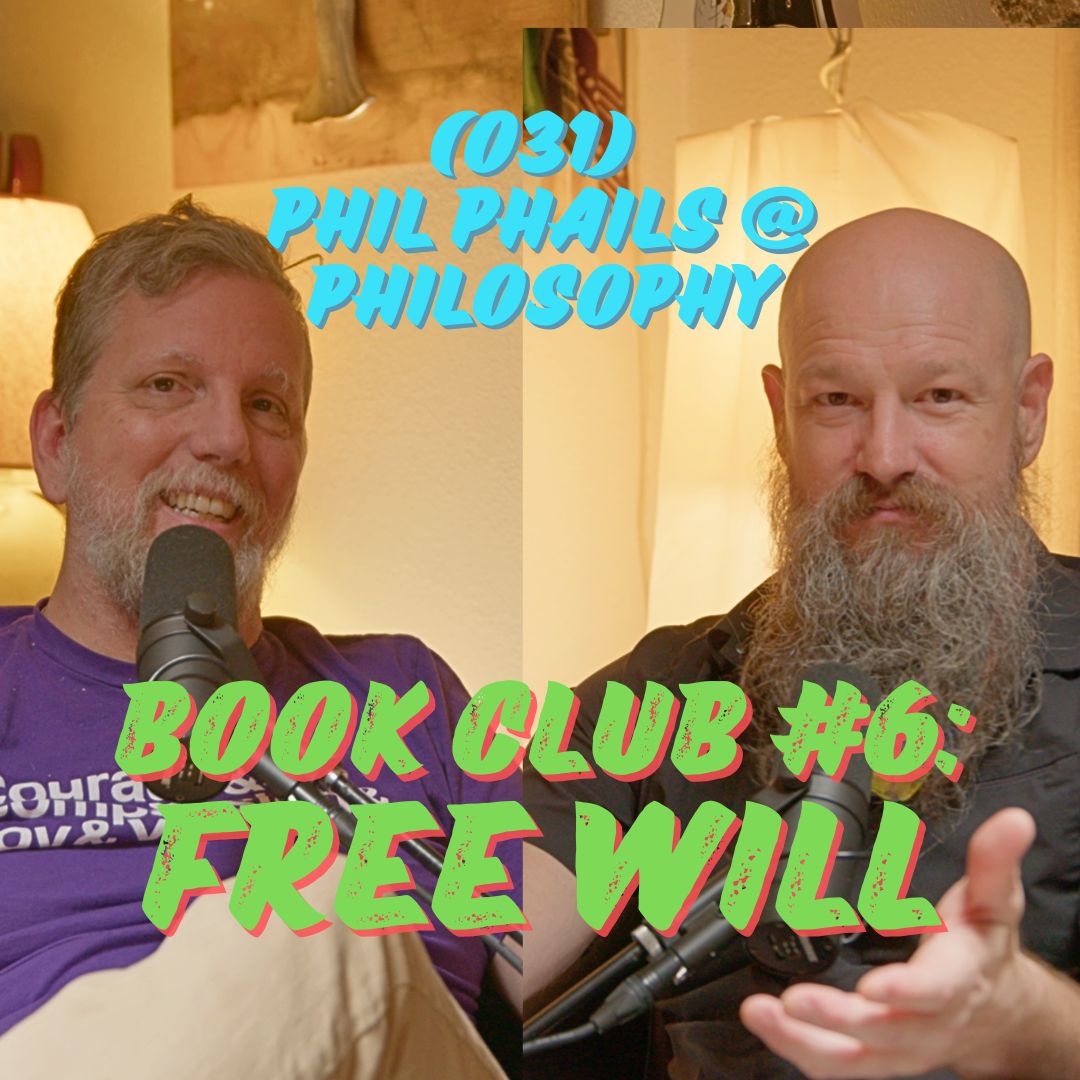
Do we really have free will, or are our choices just the result of past events, brain chemistry, and outside influences? It’s one of those questions that feels both deeply personal and impossibly abstract.
In this episode of the philosophy book club, Grant Potts and I dug into chapter 5 of Philosophy’s Big Questions, comparing Western and Buddhist approaches to free will. We didn’t solve it, but the conversation clarified a lot about how we actually live, decide, and relate to one another.
The Western Puzzle: Determinism vs. Agency
Western philosophy often frames the debate as determinism (everything is caused by prior events and natural laws) versus the feeling that we are genuine agents capable of real choice. We talked about how brain injuries, impulses, emotions, and even simple habits seem to shape behavior in ways that challenge pure “free will.”
Yet we still experience choice points every day. The analytic frameworks that explain the world so well (cause and effect, prediction) struggle to account for the lived reality of making decisions.
Buddhist Perspectives: Impermanence and No Fixed Self
Buddhism approaches this differently. With concepts like impermanence and no permanent self, the rigid Western tension between determinism and libertarian free will doesn’t land the same way. Karma is cause and effect, but not fatalistic payback—it’s a web of conditions we navigate.
The discussion highlighted how clinging to a fixed idea of “me” who must exert total control creates suffering. Agency exists in how we respond within the flow of conditions.
My Personal Reflection
This episode made me uncomfortable in the best way. What challenged me was realizing how often I want a clean story: either I’m fully in control or nothing matters. What surprised me was how practical the Buddhist framing felt—less about abstract metaphysics and more about reducing suffering through wiser responses.
I’ve spent time wondering about my own path (leaving software engineering, building this show). The conversation helped me see those shifts less as heroic individual will and more as responding to what life was showing me, influenced by community, past experiences, and inner clarity. It’s messy, but it’s real.
Practical Takeaways
- Notice choice points — Pay attention to moments when you feel the tension of “what should I do?” That awareness itself is valuable.
- Question your stories — When you feel stuck or compelled, ask what past influences or conditions are shaping the moment.
- Embrace community input — Talk to people you trust. Agency grows through relationship, not isolation.
- Act with humility — You don’t need perfect certainty. Small, intentional responses compound over time.
- Let go of perfection — Whether through determinism or impermanence, the pressure of total control is exhausting. Focus on wise next steps.
- Use narrative — Tell yourself stories about who you’re becoming. They shape how you exercise whatever agency you have.
Final Thoughts
We may never fully resolve the philosophical debate, but we live it every day. The real question isn’t proving free will exists in some absolute sense—it’s how we show up for the choices in front of us with as much wisdom and compassion as possible.
About Grant Potts
Grant Potts is a distinguished faculty member at Austin Community College, specializing in Philosophy, Religion, and Humanities. Trained primarily as a scholar of religion, Grant is also a dedicated philosopher and curriculum developer, committed to promoting liberal education through the Great Question Foundation. He is a passionate gardener, hiker, cyclist, and tabletop RPG enthusiast.