Why I Want to Try Stand-Up Comedy (And Why It Scares Me)
Phillip Jones sits down with Austin comedian Andrew Wagner to talk about starting stand-up comedy, bombing on stage, rejection sensitivity, ADHD, and what it really takes to chase creative dreams while building a meaningful life. Honest conversation about failure, timing, and showing up anyway.
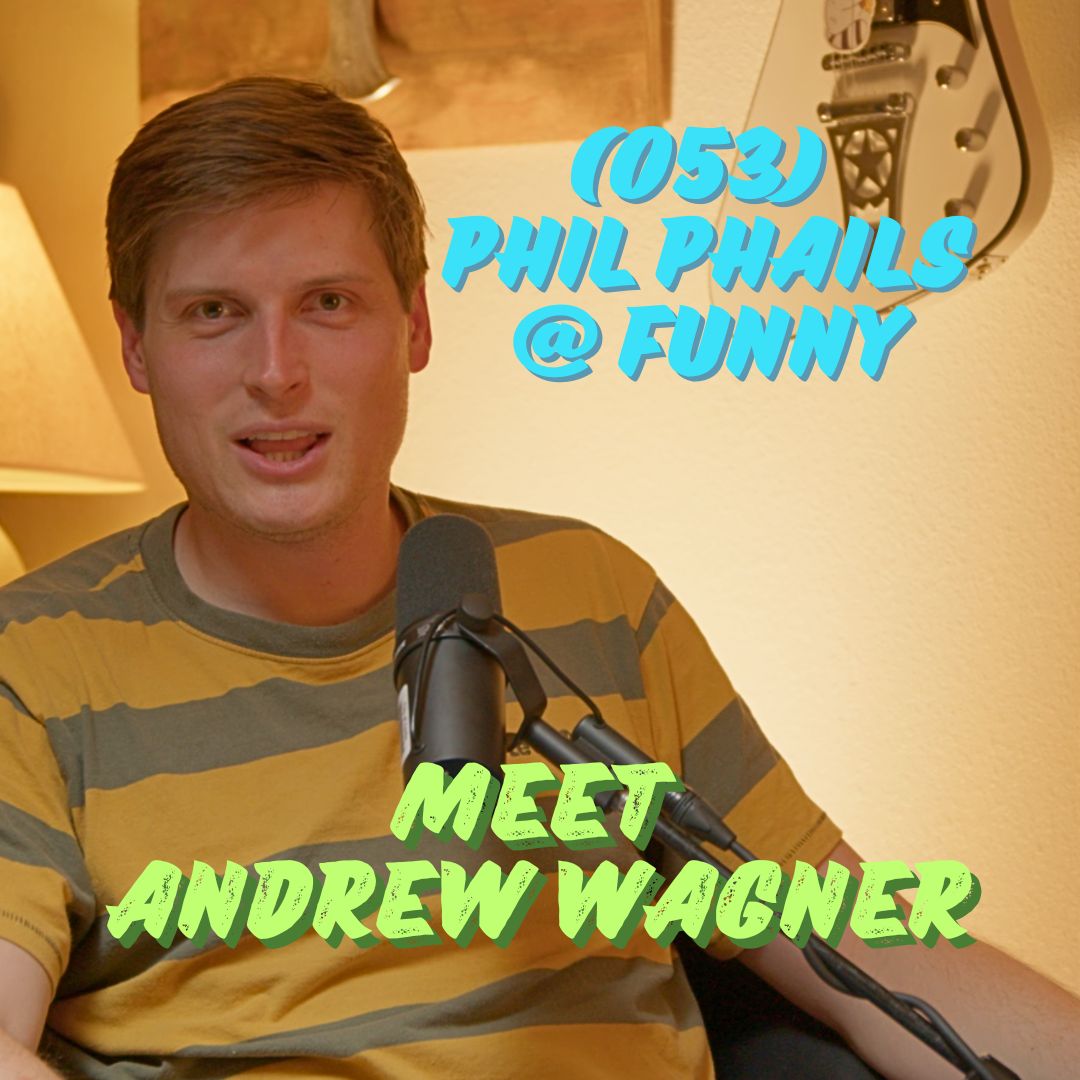
I’ve been working out with Andrew Wagner for a while now, and the guy is naturally funny. His timing, his offhand remarks, the way he reads the room—it always lands. One day after a session I finally asked if he was a comedian. He said yes, and that opened the door to this conversation.
We sat down for Phil Phails at Funny and talked about how he got into stand-up, what bombing feels like, and why the pursuit of comedy is both thrilling and exhausting. It became one of the most real talks I’ve had about creativity, fear, and personal growth.
From Scrubs Dreams to the First Open Mic
Andrew originally wanted to be a surgeon after watching Scrubs. When he learned the show was scripted, he discovered the creator started in stand-up. So at 16 or 17 he tried his first open mic. He lasted about 30 seconds before nerves pulled him off stage.
That failure didn’t stop him. He kept going back, grinding open mics, learning the craft the hard way. He moved from three-minute spots to features and eventually found his voice. But the early days were full of sweat, shaky hands, and the very real possibility of silence.
The Reality of Bombing and Rejection Sensitivity
We talked openly about rejection sensitivity dysphoria (RSD), something both of us experience. For Andrew, the fear of not landing a joke or saying the wrong thing in mixed company can be intense. On stage, failing means dead silence or the room turning against you. Off stage, it’s that sting when a joke doesn’t land with friends.
The key insight: failing at funny isn’t personal. It’s data. Some nights the room is with you, some nights it’s not. The comedians who last treat every set as practice.
ADHD, Filters, and Finding Your Voice
Andrew has ADHD and has learned to work with it instead of against it. The fast, unfiltered thoughts that sometimes get him in trouble are the same ones that fuel his comedy. He described the internal chaos before speaking—like swirling souls in Hercules—and how years of masking and filtering shape (and sometimes hinder) natural expression.
We both recognized how ADHD can make social and creative pursuits feel like walking a tightrope. The gift is the unique perspective. The challenge is not letting rejection sensitivity shut you down.
The Juice vs. the Squeeze in Creative Pursuits
Andrew reflected on the touring comedian life—late nights, travel, constant comparison—and how it stopped feeling worth it once he prioritized his relationship, family, and a more balanced existence. He still does comedy locally and loves it, but on his terms.
This hit home for me. Chasing big creative dreams can demand everything. Sometimes the real growth is knowing when to adjust the pursuit so it fits the life you actually want.
My Personal Reflection
Talking with Andrew made me confront my own envy and hesitation. I admire how he shows up with humor and presence, even when thoughts are racing. It challenged me to consider what I’ve been holding back on—whether it’s getting on stage or simply speaking more freely in everyday moments.
What surprised me was how much overlap there is between comedy and the personal growth work we do on this show. Both require you to face failure publicly, stay honest, and keep showing up.
Practical Takeaways
- Start before you feel ready — Andrew’s first open mic was short and terrifying. The only way to get better is to begin.
- Treat failure as information — Bombing isn’t the end. It’s data about timing, material, or the room.
- Protect what matters — Creative ambition is important, but so is family, relationships, and sleep. Reassess the “juice vs. the squeeze” regularly.
- Work with your wiring — If you have ADHD or rejection sensitivity, find environments and practices that support your strengths instead of fighting them.
- Build in public — Whether comedy, writing, or any skill, consistent small attempts compound faster than waiting for perfection.
- Find your people — A good crew (workout group, open mic scene, friends) gives you permission to experiment and fail safely.
Final Thoughts
Andrew reminded me that comedy, like any real growth, lives in the tension between wanting to be seen and fearing what happens when you are. The people who keep going aren’t necessarily the most talented. They’re the ones who decide the attempt itself is worthwhile.
I’m still thinking about when I’ll sign up for that first open mic. Until then, I’m grateful for friends like Andrew who make the pursuit feel a little less lonely.
About Andrew Wagner
Andrew Wagner is a professional amateur stand-up comedian in Austin, Texas. He’s been featured on the Moontower Comedy Festival and was a top 10 finalist in the 2024 Funniest Person in Austin contest.
👉 Follow Andrew on Social Media:
- Instagram: @andrew__wagner