Lifting Through the Hard Stuff: ADHD, Open Heart Surgery, and Why Fitness Saved James Carr
Personal trainer James Carr opens up about ADHD, a near-fatal heart condition, and how strength training became medicine for his mind and body.
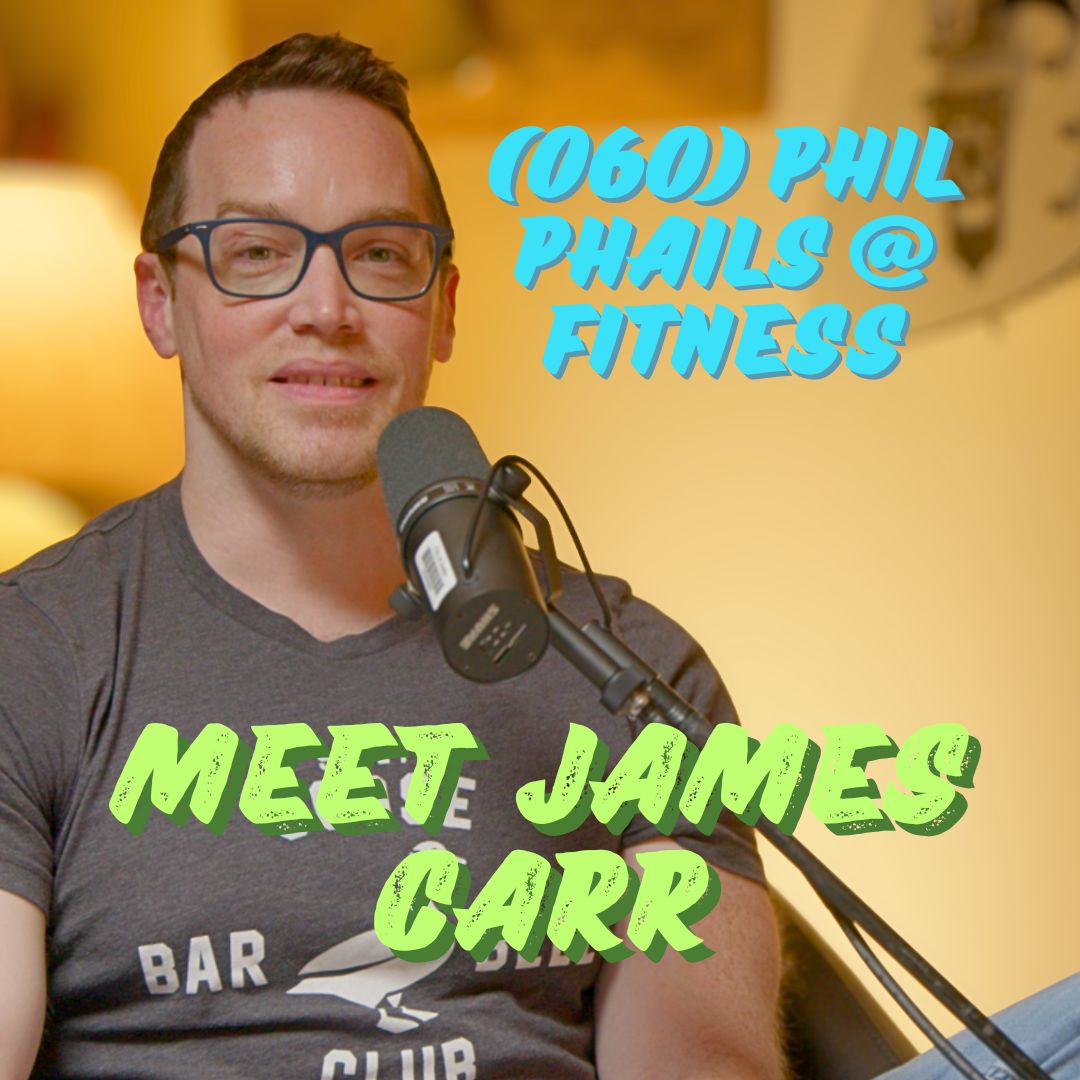
I’ve had a lot of conversations on this show, but I don’t think I’ve ever sat across from someone who has literally been told — twice in his life — that his body might kill him. And yet, every time the world handed James Carr a reason to stop moving, he found a way to lift heavier.
This episode is about fitness and mental health, yes. But it’s also about spite, survival, self-discovery, and what it means to finally find the tools your brain actually needs.
James is a personal trainer and strength coach. He also has ADHD, bipolar type 2, a heart condition he was diagnosed with at 14, and a bovine aortic valve doing its job somewhere in his chest as we speak. He’s one of the most layered people I’ve had the pleasure of rambling alongside for nearly three hours.
When the Doctors Said Stop, He Lifted Anyway
At 14, James was told he had a bicuspid aortic valve — meaning two leaflets doing the work that three were supposed to do. The doctors told him he needed to do something before he turned 30 or he would die. He was also told, somewhere in that conversation, not to exercise.
He ignored that. Completely.
He ran track. He competed. He went on to earn a Division II scholarship at Central Washington University. And every year, when the cardiologists ran cardiac stress tests trying to push his heart to its limit, his numbers kept coming back stronger.
That’s not recklessness — or at least it’s not only recklessness. James calls himself “spite-fueled.” His therapist calls it contrarianism. Whatever the label, there’s something real underneath it: a person who had been handed a ceiling and decided the ceiling was negotiable.
At 34, during COVID, the conversation changed. The aneurysm on his ascending aorta had grown to a point where his cardiologist told him bluntly that if he contracted COVID, his heart might not survive the stress. It was time for open heart surgery.
The day before his diagnosis, James had hit a 305-pound squat at 160 pounds of body weight. The video of that lift, he told me, shows him “cocky as hell.” Life had other plans.
The Surgery, the Stranger, and the Moment Everything Shifted
James’s open heart surgery involved replacing his aortic valve with a 29-millimeter bovine valve — the largest size available, naturally, because of course he asked for the biggest one — and replacing about five inches of his ascending aorta with synthetic tubing. He woke up with 20 pounds of fluid retained from internal bleeding, tubes in places he’d rather not discuss, and his first anxiety attack.
The reason for the anxiety attack? He couldn’t hear his own heartbeat.
James had heard his heartbeat in his head his entire life — loudly, constantly, every day. It was the sound of an overworked valve doing more than it was designed to do. After surgery, the silence was so disorienting that he began pulling out his tubes and IVs in a panic before the nurses sedated him.
But the moment that really stayed with him happened that first night in recovery. From the other side of the wall, he could hear another patient — someone who’d gone into surgery the same day — coughing, retching, and in serious pain. And then things on that floor got very quiet, very quickly.
The other patient had coded and didn’t survive.
James was still foggy from sedation when it happened. But as the days passed and his mind cleared, the weight of it settled in. He’d been one coin flip from the same outcome. A few things that went wrong had gone wrong for him too — the bleeding, the transfusions, the instability. It just happened to turn out differently.
That moment became the seed of what he now calls his medical PTSD. He spent months carrying a blood pressure cuff everywhere he went. He would pause during workouts, watching his vision start to pulse the way a video game screen does when your character gets shot, checking whether he’d pushed too far. The recovery — mental and physical — took years.
And six months after surgery, he pulled 315 pounds for sets of six on the deadlift.
ADHD, Late Diagnosis, and Learning to Stop Punishing Yourself
James wasn’t diagnosed with ADHD until he was 36. He went in for anxiety and left with a diagnosis that included ADHD, generalized anxiety disorder, and bipolar type 2 — what he called going on “a Costco run for a diagnosis.”
Growing up undiagnosed, the narrative he absorbed was simple: he was lazy, undisciplined, not trying hard enough. He was placed in special education not because he was struggling with the material — he finished everything quickly — but because he couldn’t stop goofing off once he was done and the teachers didn’t know what to do with him.
That’s a painful thing to carry for decades. And he carried it in some unhealthy ways — including periods of self-medicating with alcohol and marijuana, which he was honest and clear-eyed about in our conversation.
The diagnosis, he said, didn’t so much change him as reframe everything. He wasn’t broken. He’d just been using the wrong tools.
What followed was something I found genuinely moving: instead of punishment, he shifted to exploration. What actually works for this brain? What structure, what movement, what context makes it easier to function and feel okay? He gamifies his days. He makes lists. He schedules hard tasks in blocks and gives himself permission to switch gears. He treats caffeine intentionally — only when there’s somewhere for the energy to go.
He can’t take standard ADHD medications because of his heart condition, so he’s built an entire life architecture around managing his neurodivergence through movement, structure, and self-awareness. That’s not a workaround. That’s a completely different and arguably more sustainable approach.
Movement as Medicine: What Lifting Actually Does
The word “medicine” came up in our conversation naturally, without either of us reaching for it. James described exercise — specifically strength training — as the thing that most reliably stabilized his brain chemistry during the swings of bipolar type 2.
He talked about the manic episodes from his younger years: the ones where he’d write an entire script in one sitting without eating, or drive two tanks of gas worth of distance just to somewhere, anywhere. And the depressive episodes that followed — lasting twice as long as the mania, leaving him disappearing from friends, turning toward alcohol, his mind “cruel” and hard to quiet.
What helped most wasn’t endurance work — James is very clear that running circles is not his thing. It was lifting. Heavy lifting specifically. The immediate feedback loop. The measurable progress. The clear negotiation between your mind and your body every time you get under the bar.
He described his weekly “hell day” workout — a 72-minute session he dreads every single Wednesday morning, during which his brain cycles through every possible excuse to quit. He said the only way through it is one set at a time. Do this set. Then think of another excuse. Then do that set.
That discipline isn’t about willpower in the abstract. It’s about a person who knows, from deep personal experience, that his brain needs to move in order to be livable. Exercise isn’t optional for James the way it might feel optional for someone else. It’s infrastructure.
Body Dysmorphia, Eating in Public, and the Lies We Tell Ourselves
One of the most unexpected parts of our conversation was when James brought up body dysmorphia — the fact that he doesn’t like eating in front of other people, that compliments about his body trigger discomfort rather than pleasure, and that there’s a version of himself in old photos at peak athletic condition that he can’t stop comparing himself to even though he knows that’s not a fair or useful comparison.
What struck me about his honesty here was how rarely men in fitness talk about this. The assumption is that if you look a certain way, you must feel a certain way. That confidence comes with the physique. James dismantled that cleanly.
He talked about the negative comments people would make when he’d eat in social settings — projecting their own food anxieties onto him, implying he should be eating “cleaner” — and how over time those moments created a performance anxiety around eating that he still navigates. He goes home. He eats what he wants. He doesn’t perform.
He’s doing the work to accept the body he has now — not the body he had at 20 or 30. He grows his chest hair out to cover his surgical scars. He’s working on appreciating those scars as stories rather than flaws. He shared a phrase I genuinely loved: tattoos are art, scars are stories.
Personal Reflection: What This Conversation Did to Me
I want to be honest about something. When James first mentioned the guy on the other side of the wall who died, I felt the weight of that in a way I wasn’t expecting.
I think sometimes we talk about near-death experiences as if they’re clean turning points — the moment you nearly died and then became wiser. But what James described was messier and more real than that. He didn’t have some transformative vision in the recovery room. He had a panic attack and ripped his tubes out. He lay in a drug fog listening to a stranger die. The transformation happened slowly, over years, through therapy and coaching and a lot of lifting.
That challenged me. I’ve been on my own health journey and I think I’ve been waiting for the clarity moment, the clear signal that things have shifted. James reminded me that it doesn’t always work that way. Sometimes the shift is just showing up, repeatedly, until one day the environment around you is better and you realize you love what you’re doing again.
He almost left the fitness industry last year. He wasn’t happy, wasn’t in the right environment, was seriously reconsidering everything. And then a new gym, a new community, a class of people who showed up and worked hard and didn’t make him feel like he had to perform — it changed his mind.
That was the part I’ll be sitting with the longest.
Practical Takeaways
-
Your diagnosis isn’t a ceiling. James was told at 14 that his body would limit what he could do. He went on to become a competitive scholarship athlete and a strength coach. Medical guidance matters — but so does advocating for yourself within it.
-
ADHD isn’t laziness in disguise. If you’ve spent years being told to “try harder” and it hasn’t worked, it may be time to ask whether you’re using the wrong tools, not whether you’re the wrong person.
-
Movement is especially powerful for neurodivergent brains. The immediate feedback of lifting — you either moved the weight or you didn’t — can provide the dopamine loop that other activities don’t. If focus and motivation are a constant struggle, start with your body.
-
Body dysmorphia affects people who “look fine.” If someone shares that they’re struggling with how they see their body, the response “but you look great” doesn’t help. Their experience isn’t less valid because of how they appear to you.
-
You don’t need the perfect environment — but environment matters. James didn’t change his work ethic or his passion. He changed his context. Sometimes the problem isn’t you. It’s the room.
-
Gamify what you dread. When James faces his hardest workout of the week, he doesn’t motivate himself with inspiration. He just does the next set. Then the next one. That’s it.
Conclusion
James Carr came in wearing a Silly Goose shirt and left me thinking about mortality, identity, and what it means to build a life around what your particular brain and body actually need rather than what they’re supposed to need.
He’s 39, carrying a bovine valve, titanium sutures in his sternum, and a late ADHD diagnosis that reframed his entire self-narrative. He’s also the strongest he’s ever been — not just physically, but in terms of understanding himself.
That’s the kind of fitness conversation I want to keep having on this show. Not the kind about protein macros or rep schemes, though we covered those too. The kind that makes you question what you’re actually building when you show up and do the hard thing over and over again.
Thanks for coming on, James. And to whoever is reading this with a diagnosis that’s felt like a life sentence — I hope this one helps a little.
About James Carr
James Carr is a personal trainer and fitness instructor specializing in strength and conditioning. In other words, he enjoys picking up heavy objects—and getting other people to do the same.
About 90% of his personality revolves around health and fitness, while the other 10% is fueled by hobbies, pop culture, and his ADHD. He loves hopping on the “tangent train,” seeing where conversations go, and connecting with people—bringing plenty of golden retriever energy along the way.
If you ask about one of his special interests, be prepared for an unskippable cutscene—you’ll get every bit of lore he has on the subject.
👉 Find James:
- Instagram: @racecarr_