Most people approach mindfulness with a quiet fear of doing it wrong. They worry about the quality of their attention, the consistency of their practice, or whether their mind is supposed to be quieter than it is. Dave Cutherell offers a different starting point: the only real failure is not beginning.
In this conversation we explored mindfulness less as a technique to master and more as a repeated act of coming home—to the body, to the present moment, and to the full range of what is already here. The episode is framed as Phil Fails at Mindfulness Meditation. What emerged was an invitation to stop treating the practice like a performance.
Watch the Five Questions conversation:
There Is No Wrong Way
Dave is clear on this point. Once you sit down and bring attention, you are already doing the practice. The common pitfalls—distraction, inconsistency, the sense that something is supposed to look or feel a certain way—are not evidence of failure. They are simply the material the practice works with.
He returns often to a teaching he received: allow, allow, allow. The work is not to manufacture a preferred state. It is to let the present moment be as it is, including the thoughts, sensations, and resistance that arrive. Simple, he notes, is not the same as easy.
Coming home, in his language, means being at home in the body and in this moment with the entirety of one’s living existence. It includes thoughts, feelings, sensations, and the ordinary textures of perception. It is closer to the feeling of flow than to a forced emptiness.
The Teacher’s Path
Dave is a woodworker and furniture maker as well as a mindfulness teacher. The combination is not accidental. Both crafts require presence, patience with material that does not always cooperate, and a willingness to return to the same basic gestures again and again.
He has explored multiple traditions—Zen, Taoism, Hinduism, Christian mysticism—without settling into a single exclusive path. For a long time the seeking itself was active and wide-ranging. More recently he has found it easier to rest in his own understanding and to go deeper with a few voices rather than continue sampling endlessly. The outer teachers still matter; the primary guide, he suggests, is already inside.
His teaching work has found a natural home in recovery settings. People arriving from brokenness often bring a readiness that makes the practice immediately relevant. He is not interested in convincing anyone. He is interested in creating space so others can have their own direct experience.
Vulnerability and Being Seen
One of the more human moments in the conversation came when Dave spoke about the residual shame that can still arise when he is asked to be playful or vulnerable on camera. Being seen in silliness or in openness still carries old charge. The recovery process, for him, includes continuing to show up anyway, noticing that the shame softens with repetition.
This honesty fits the larger theme of the episode. Mindfulness is not a polished state one achieves and then displays. It is a willingness to meet what is present, including the parts of ourselves that prefer to stay hidden.
Watch the full Life Story conversation:
Personal Reflection
What stayed with me is the relief in the reframing. So much of the difficulty people report with meditation is secondary: the commentary about whether they are doing it correctly. Dave’s insistence that the practice begins the moment attention is brought, and that the rest is simply the path, removes a large and unnecessary layer of pressure.
I recognized my own tendency to turn simple practices into projects that can be succeeded at or failed. The invitation here is quieter. Sit. Notice. Allow. Return. Do it again tomorrow.
Practical Takeaways
- The primary failure in mindfulness is not starting. Once attention is brought, the practice is underway.
- There is no single correct technique or mental state that must be achieved.
- “Allow, allow, allow” is a useful orientation when the mind begins measuring or correcting the experience.
- Coming home means being present with the full range of body, thought, and feeling rather than editing the moment.
- Simple practices are often not easy; the difficulty is part of the material.
- Seeking widely can be useful for a season; eventually resting in one’s own direct experience becomes more important.
- Teaching, when it works, creates space for others’ experience rather than delivering a finished answer.
Conclusion
Dave Cutherell’s version of mindfulness is unadorned. It does not promise special states or rapid transformation. It offers a repeated opportunity to return to what is already here and to meet it with a little more willingness than the day before.
The conversation itself felt like an extension of the practice: two people sitting together, paying attention, allowing the exchange to unfold without forcing a particular outcome. That may be the most useful demonstration of all.
This is Phil Phails at mindfulness meditation.
Guest Bio
Dave Cutherell is a meditation teacher, woodworker, and devoted family man living in Austin, Texas. He has been practicing meditation for over three decades in the pursuit of a more peaceful and fulfilling life. He focuses his teaching of mindfulness meditation on those interested in dealing with ADHD and addiction, and those who seek a way out of mental suffering and into a happier and more fulfilling life.
When he is not teaching meditation, he is either working to spread the gospel of woodworking at the Austin School of Furniture or being a grandparent to two beautiful young souls.
Find Dave
- 🌐 Custom Made Dave: custommadedave.com
- 🪵 Austin School of Furniture: austinschooloffurniture.com/community-classes
If This Resonated
These conversations explore similar themes.
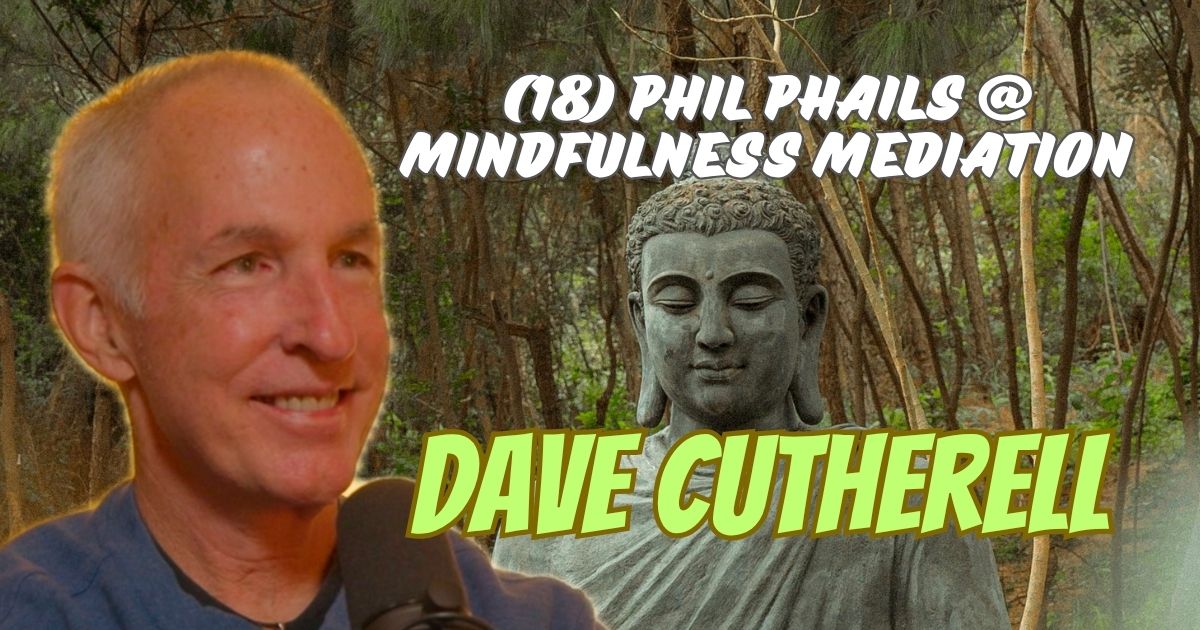
Mindfulness Meditation for ADHD: Breathwork and Practical Tools to Calm Anxiety and Overwhelm
Training attention and awareness so calm becomes a skill you can return to in real time
Mindfulness-Based Stress Reduction for Stress, Body Scans, and Everyday Calm
Learning to meet stress with more awareness, less judgment, and a steadier body