Why deeper conversations often begin when we stop rushing to conclusions
I’ve spent a lot of time rushing through life, ideas, and conversations. When David Beaver joined me on Phil Phails, we set out to explore what it means to fail at slow thinking. As a professor of linguistics and philosophy, director of Cognitive Science at UT Austin, and someone who moves between academic rigor and ecstatic dance, David brought both intellectual depth and lived honesty to the topic.
Our conversation wandered through Daniel Kahneman’s Thinking, Fast and Slow, ADHD, flow states, bias, and the tension between wanting to slow down while feeling the pull of speed. It felt less like an interview and more like two people trying to catch their own minds in motion.
The Difference Between Fast and Slow Thinking
David explained Kahneman’s framework clearly: System 1 (fast) is automatic, intuitive, and emotional. System 2 (slow) is deliberate, effortful, and logical. Most of the time, we run on System 1 because it’s efficient and feels natural.
The failure isn’t using fast thinking. The failure is never engaging slow thinking when it matters — like in important decisions, relationships, or when our biases are running the show.
We laughed about how even choosing the same seat in a classroom every day is fast thinking in action. Our brains love efficiency until that efficiency leads us astray.
ADHD, Hyperfocus, and the Ability to Slow Down
David pushed back gently on the idea that ADHD means you can’t slow down. Many people with ADHD actually have exceptional abilities to hyperfocus — to enter deep flow states where time disappears and work gets done.
The challenge isn’t a complete lack of slow thinking. It’s regulation: knowing when to speed up, when to slow down, and having the awareness to choose. This resonated with me deeply. I’ve often felt the shame of moving too fast in social settings or decisions, only to realize later I missed the moment.
When Fast Thinking Fails Us
We talked about politics, stereotypes, and how easy it is to vote along party lines without slow examination. Fast thinking loves patterns, familiarity, and quick emotional judgments. Slow thinking asks harder questions: What am I missing? What evidence contradicts my view?
David shared how propaganda and cultural narratives work through fast associative thinking. Recognizing this in ourselves is uncomfortable but necessary work.
Personal Reflection
Talking with David reminded me how often I default to speed — in conversations, decisions, even in how I process emotions. What surprised me was his compassion for neurodivergent ways of being. What challenged me was seeing my own rush as sometimes a strength (getting things done) and sometimes a limitation (missing depth).
I left thinking more about discernment: when does speed serve me, and when does it protect me from discomfort? David’s calm, curious presence modeled the very slow thinking we were discussing.
Practical Takeaways
- Notice when you’re on autopilot. Ask yourself: Am I using fast thinking because it’s easy or because it’s appropriate?
- Build in deliberate pauses before big decisions. Even 60 seconds of slow reflection can change outcomes.
- For those with ADHD or fast minds, honor your hyperfocus ability while creating structures that support slow thinking when needed.
- Challenge your quick judgments. When you feel strongly about something, ask: What would slow thinking reveal here?
- Practice “don’t know mind.” Stay open to uncertainty instead of rushing to certainty or conclusions.
- Use your body as a teacher. Movement, dance, or breathwork can help regulate between fast and slow states.
- Review past “failures” through a slow lens. What can you learn instead of judging yourself?
Conclusion
Failing at slow thinking isn’t about being broken. It’s about being human in a world that rewards speed. The invitation is to build awareness of when fast serves us and when slow thinking is the wiser path.
David Beaver showed me that this isn’t about perfection. It’s about curiosity, practice, and giving ourselves permission to move at different speeds in different moments. I’m still learning. But I’m slowing down enough to notice the learning itself.
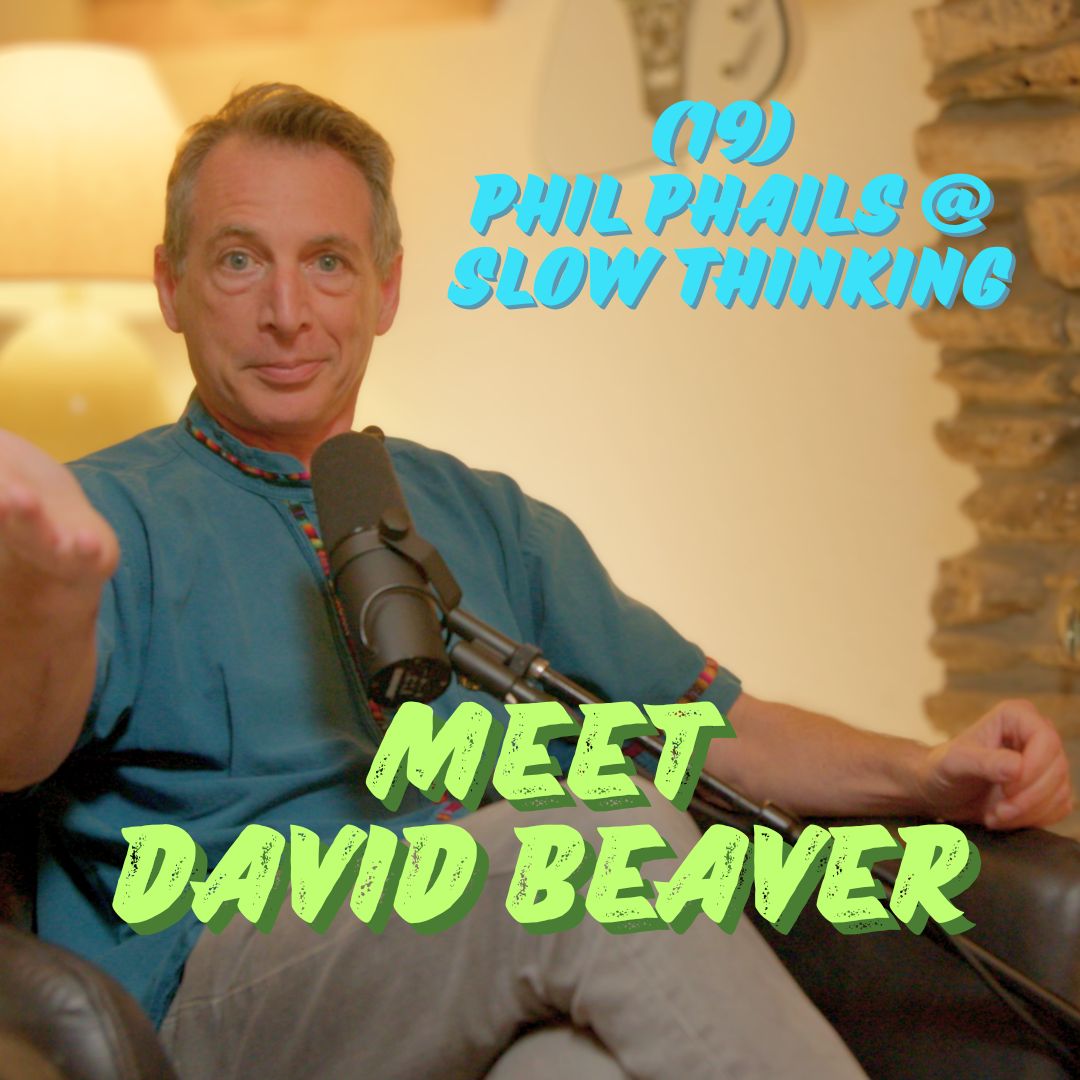
About David Beaver
David Beaver is a professor of linguistics and philosophy at the University of Texas at Austin, where he also directs the Cognitive Science program. With a background spanning the UK, Netherlands, and Stanford, his work explores meaning across linguistic, philosophical, psychological, and computational perspectives. He is the co-author of The Politics of Language (with Jason Stanley) and is passionate about contact improvisation dance, connection, and flow.
Find David’s work through UT Austin or his publications in linguistics and cognitive science.
If This Resonated
These conversations explore similar themes.

Why Neutrality Is Impossible, Language, Power, and Bias in Politics and Everyday Life
How framing, language, and hidden power shape what we call objective

Consciousness Explained: Western Science, Physicalism, and Buddhist Mind-Only Philosophy
Why your sense of self feels real but may only be a stream of experience