The Idea
This series follows the real process of becoming a better cyclist with cycling coach Mark Duroy and host/producer Phillip Jones.
Rather than simply talking about training, we’re documenting the experience of being coached over time — setting goals, building a training plan, riding, adapting, struggling, improving, and figuring out what actually works.
Along the way, we’ll bring in people who understand the different pieces of that process: bike fitters, nutritionists, physical practitioners, coaches, racers, former professionals, mechanics, ride leaders, lawyers, and experts in sleep, mobility, technology, recovery, and performance.
Each person brings a different perspective to the same larger question: what does it take to become the cyclist — and the person — you want to become?
This Isn’t a Cycling Advice Show
We’re not trying to create another show where someone sits across from an expert and asks them to explain their field.
Instead, the series uses real experiences and real questions as the starting point.
If we’re working on training and performance, that raises questions about nutrition. If we’re talking about nutrition, that raises questions about body composition and body image. If we’re riding in groups, that raises questions about etiquette, leadership, community, and belonging. If we’re trying to improve performance, that raises questions about sleep and recovery. If we’re becoming more serious cyclists, that raises questions about equipment, technology, maintenance, and money.
And eventually, performance itself raises much bigger questions — about obsession, identity, and what it means to pursue excellence without losing the joy that brought you to cycling in the first place.
Those questions are what make this a Phil Phails series rather than simply a cycling series.
The Coaching Experiment
At the center of the project is the coaching relationship between Mark and Phillip.
We’ll document the process over time: Goals → Assessment → Training Plan → Training → Feedback → Adjustment → Repeat
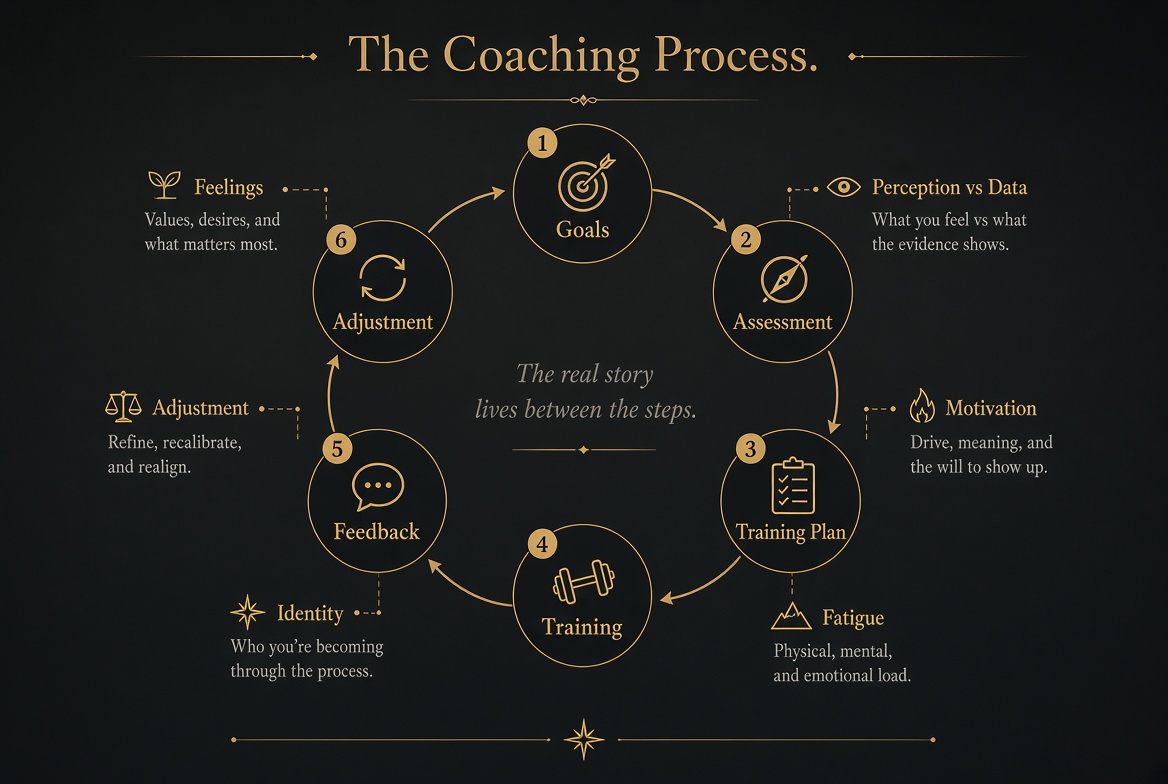
A major part of the story is what happens between those steps. How does the rider feel? What does the rider perceive? What does the data say? What happens when the plan doesn’t work? How do motivation, confidence, fatigue, enjoyment, expectations, and identity affect performance?
The intention is to show the actual experience of being coached, rather than simply discussing coaching as an abstract concept. We’ll also explore that process through different types of riders — from someone relatively new to structured training to experienced athletes and racers.
Where You Come In
Every expert in the series represents a different piece of the cycling experience.
What We’re Creating
Each conversation becomes part of a larger media project rather than a one-off interview. Content includes long-form conversations, YouTube episodes, short-form video, social clips, written articles and episode pages, Austin Public Access television, podcast distribution, and collaborative social content with guests and organizations.
The goal is to create useful, thoughtful media that people can discover through cycling while also reaching people who are interested in performance, psychology, identity, community, and personal growth.
What You Get From Participating
We’re not simply asking you to “come on a podcast.” We’re inviting you to contribute your expertise to a larger, ongoing story while creating a piece of media you can share with your own audience.
Association With the Series
Your participation connects your work to a larger Austin cycling project exploring performance, health, community, and the human experience of becoming better at something.
Most importantly, we’re interested in creating a conversation that is genuinely useful to the people watching — not simply promotional content.
The Larger Question
Cycling gives us a surprisingly good laboratory for studying ourselves.
We can measure watts, heart rate, distance, speed, sleep, weight, training load, and performance. But numbers don’t tell the whole story.
Why does one person keep riding when things get difficult? Why does another person quit? Why does improvement sometimes make us happier — and sometimes make us miserable? Why do some people become stronger through competition while others become consumed by it?
And what happens when the pursuit of becoming better at something forces us to confront who we are?
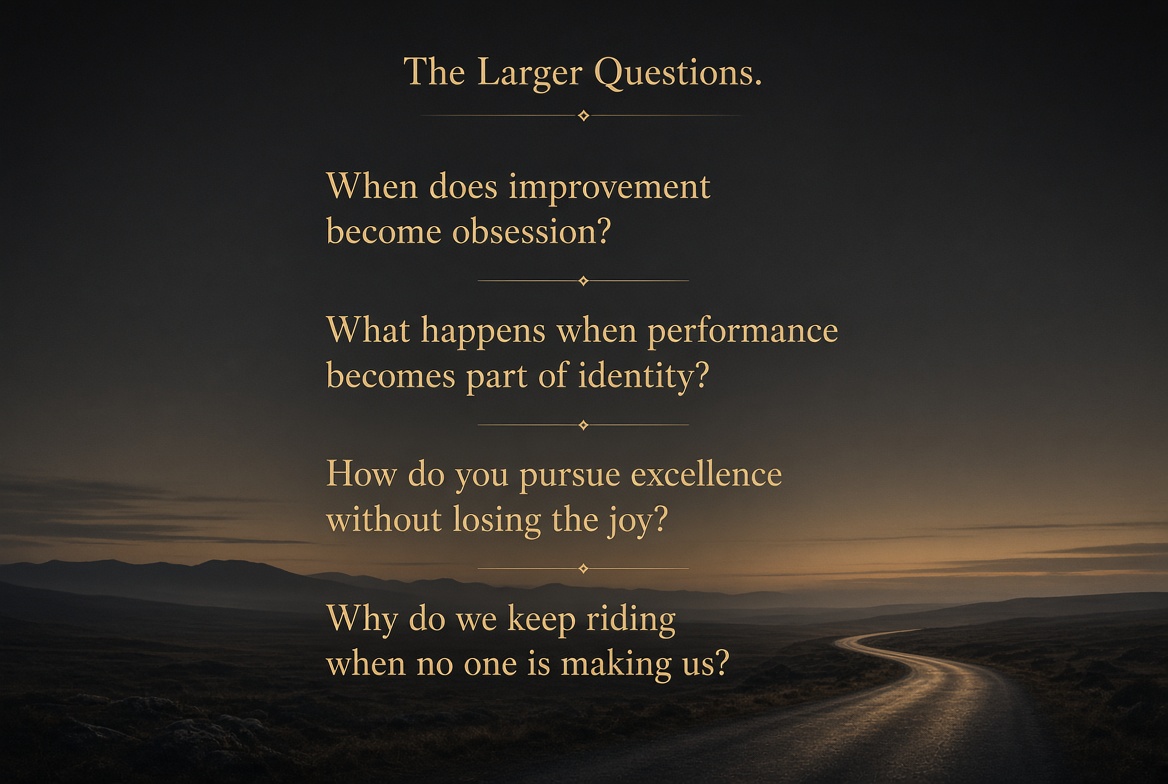
That’s the territory we’re interested in exploring.
Cycling is the vehicle. The human experience is the subject.
Phil Phails
Phil Phails is an independent long-form media project based in Austin, Texas, exploring identity, psychology, performance, and the process of becoming who we are. Learn more about the show →
The cycling series extends that mission into a world where questions about performance, identity, discipline, community, and personal growth are constantly playing out in real time.
Supporting the Series
Phil Phails is an independently produced project. Every long-form conversation involves significant production time and expense — from pre-production and research through filming, editing, post-production, distribution, and the creation of short-form content.
Because this series is being developed as a larger ongoing project rather than a collection of one-off interviews, I’m also looking for participants, businesses, and organizations who are willing to share in the cost of producing it.
Support can range from contributing toward an individual episode, to sponsoring multiple episodes, to providing meaningful in-kind support.
The goal is not simply to sell advertising. We’re looking for people and organizations who believe in the project and want to help create something valuable for Austin’s cycling community and the larger cycling audience.
Editorial participation and sponsorship are related but separate. The conversation stays useful and authentic regardless of whether a participant provides financial support — sponsorship exists to help make the production possible and create additional opportunities around the content.