There are spaces that claim to help men grow. They invite vulnerability, shadow work, and honest confrontation. Sometimes those same spaces reproduce the very patterns of aggression and power they say they want to transform.
In this episode I sat with my thought partner Alice and tried to tell the story of what happened in my I-Group. I experienced verbal aggression, an ultimatum, and a clear rupture of safety. I also had to face my own history of speaking that way to the people I love. The conversation became less about one incident and more about the larger questions: How do we work with anger without reinforcing it? What does real accountability look like when power is uneven? And when does staying in a container stop being growth and start becoming harm?
What Happened
While serving as King in an I-Group meeting, I asked that both another man and I remain quiet so other voices could be heard. Later, during charges, that same man expressed a charge with me. I chose not to stand in his mirror. An abrupt, loud, aggressive expletive was shouted. He questioned my leadership, said he did not feel safe, and presented an ultimatum: either I leave or he would. He told me several times, with raised voice and aggressive tone, to shut my mouth.
Our written agreement states that any man may pass on participation without retribution. The Mankind Project USA Ethics Policy speaks of respect and safety—no bullying, harassment, or intentional harm. What I experienced felt inconsistent with both.
Because the man holds the role of Elder, the impact landed differently. Organizational power and influence amplify words and tone. Safety is not only about physical threat. It is also about whether the nervous system can stay regulated enough to do real work.
The Research on Anger and Venting
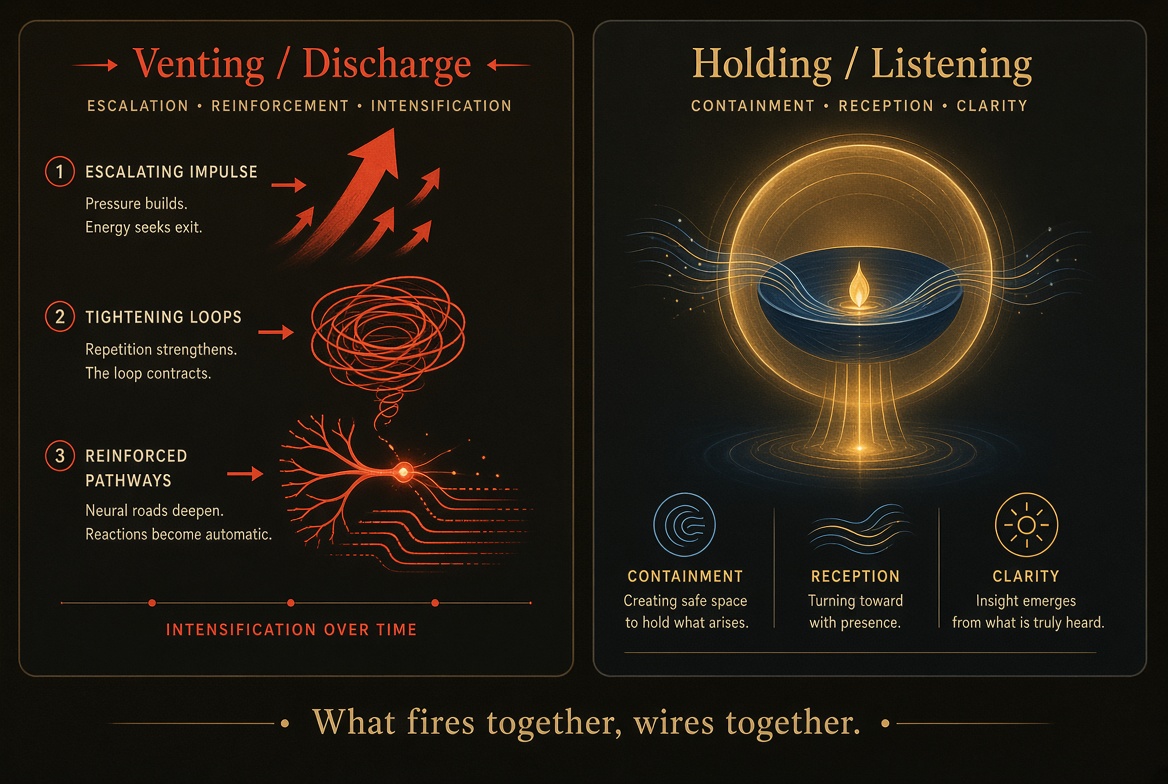
Before the incident I had already written to the group about how we work with anger. The common practice of punching pillows or yelling as “release” is well-intentioned. The evidence suggests it often strengthens the association rather than dissolves it.
Neuroscience is straightforward: what fires together, wires together. Research by Brad Bushman and others shows that venting anger physically tends to escalate aggressive responding rather than extinguish it. Thích Nhất Hạnh compared anger to a crying baby that needs to be held gently, not forced out. Julia Cameron calls anger a map—valuable information about crossed boundaries and unmet needs, not something to explode or deny.
When a group repeatedly practices aggressive discharge, it risks normalizing intensity and aggression. What we practice becomes our pattern. Modeling listening to anger rather than acting it out may build more lasting safety and capacity.
Owning My Part and My History
I have heightened sensitivity to male anger and aggression directed at me. That sensitivity is real, embodied, and shaped by history. I take responsibility for it. It does not give me the right to control a group, but it also does not require me to override clear present-moment signals about safety and containment.
I also carry guilt about times I spoke that way to my own children. I did not know another way then. I am learning one now. The desire to become someone they can co-regulate with—someone solid when things get scary—is part of what this whole process is teaching me. People do the best they can with what they have. When they have better, they can do better. I want better models, and I want to become one.
Power, Bias, and the Risk of Pathologizing Dissent
In hierarchical or tightly identified groups, several biases often appear: authority bias that gives senior members more leeway; in-group bias that protects cohesion by reframing discomfort as disloyalty; the fundamental attribution error that locates the problem in the person raising concern while contextualizing the aggressive behavior. Spiritual or psychological bypassing can reframe concrete issues of harm as purely individual “shadow work.”
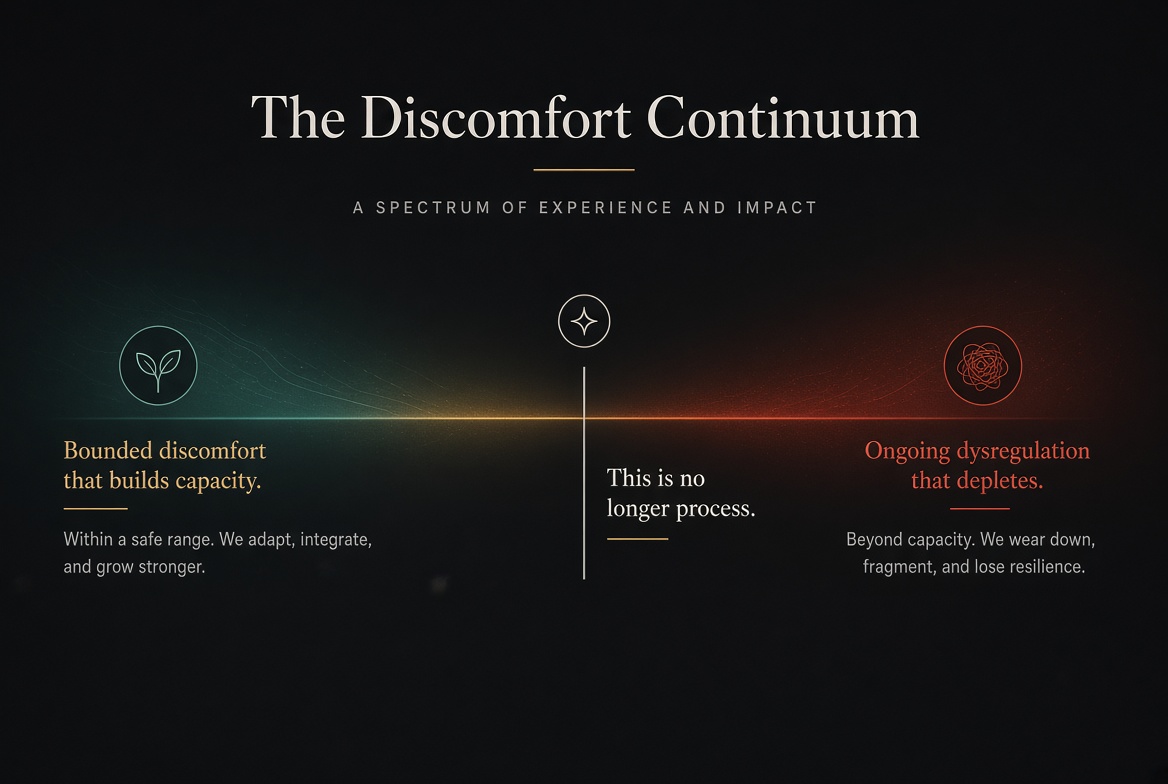
Naming these dynamics is not an accusation. It is an attempt to keep the conversation honest. Growth-related discomfort is time-limited, bounded, and followed by repair. Ongoing dysregulation leaves the nervous system less resourced. Distinguishing the two is part of the work.
Personal Reflection
What stayed with me after talking with Alice is how ordinary the choice has become. At 48 I can choose who I am around and how I am influenced. I could not choose that as a child. Staying in a space that repeatedly activates fear and aggression is no longer neutral. Leaving can be the more generative act.
I still want men’s work that holds intensity without sacrificing safety. I still believe containers can transform rather than simply recirculate old patterns. But I no longer believe that every rupture is automatically “process.” Some ruptures are simply harm that needs clear naming, accountability, and repair—or exit.
For a deeper written reflection on the same events, including the full letter to the group, research references, and further analysis of power and accountability, see the accompanying article:
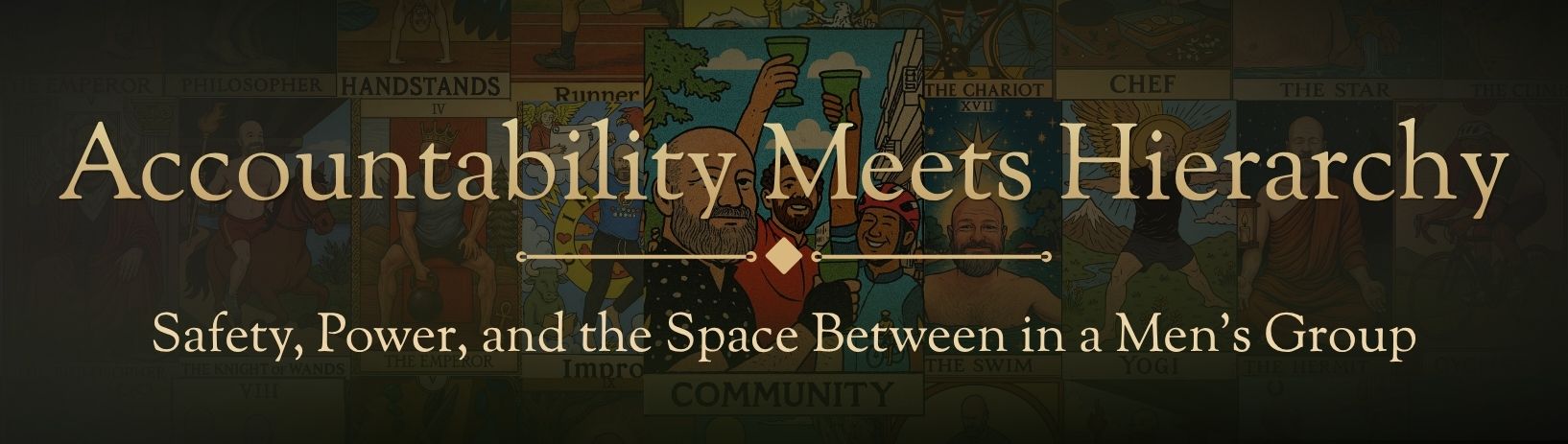
When Accountability Meets Hierarchy
Practical Takeaways
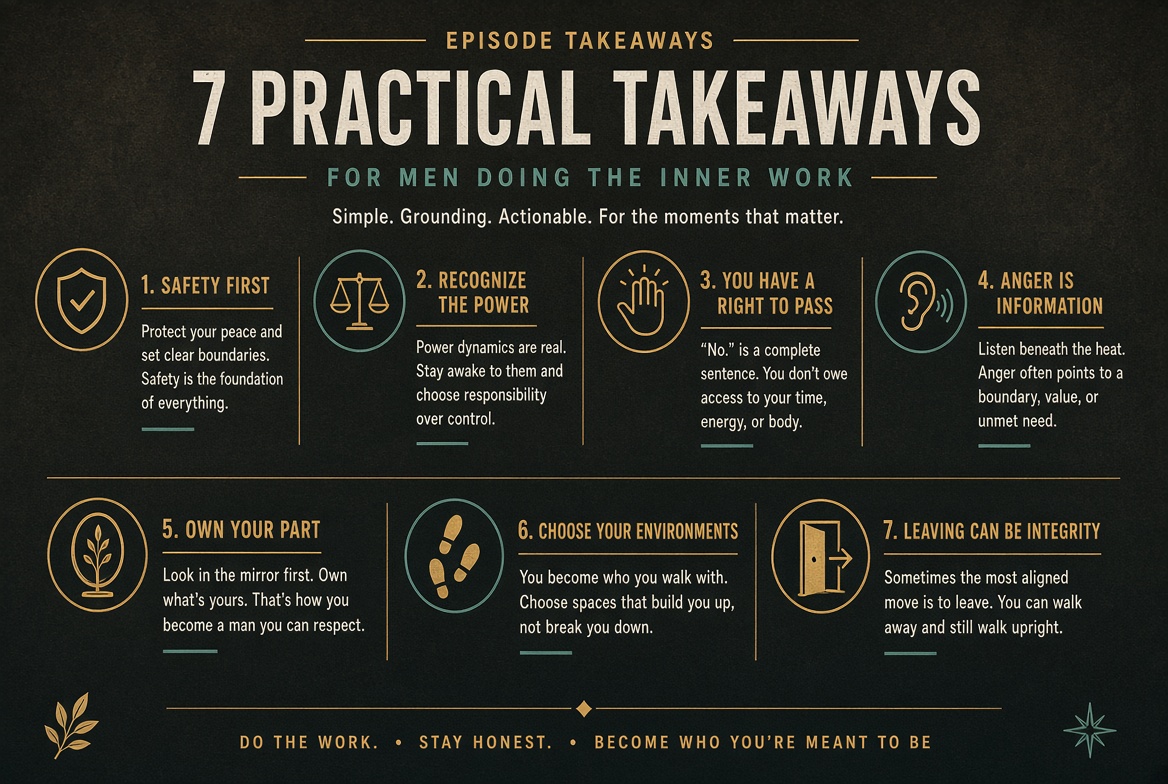
- When safety is repeatedly compromised, leaving can be an act of integrity rather than failure.
- Notice power differentials. An Elder’s words and tone land differently than a peer’s.
- Protect the right to pass without retribution. Agreements mean little if they are not upheld.
- Test anger practices against the evidence. Physical or verbal venting often reinforces rather than releases.
- Own your sensitivities without letting them become the only story. They are data, not verdicts.
- Choose environments that model the regulation you want to embody for the people you love.
- Distinguish growth-oriented discomfort from ongoing dysregulation. The first builds capacity; the second depletes it.
Conclusion
Men’s groups can be places of profound healing. They can also become places where aggression is justified as authenticity and dissent is pathologized as personal shadow. The difference often lies in whether power is examined, whether safety agreements are real, and whether anger is treated as information rather than fuel.
This episode is one man’s attempt to tell the story without collapsing into blame or self-erasure. The work continues—in the choices I make about who I sit with, how I speak to the people I love, and whether I am willing to keep listening for the quieter, more regulated way.
Guest / Context Note
This episode features Phillip Jones in conversation with Alice as thought partner. The discussion draws on lived experience in a Mankind Project I-Group, personal reflection documents, and established research on anger, catharsis, mindfulness, and nervous-system regulation.
If This Resonated
These conversations explore similar themes.

ADHD in Groups: Hope, Rejection, and the Path to Agency
Navigating Group Exclusion with ADHD: A Personal Exploration
Authentic Connection, Emotional Expression, and Men’s Work with David Garrison
Building trust, emotional openness, and connection through real human presence and shared experience